 We visit a French city synonymous with exquisite porcelain.


Fill in the blancs
We visit a French city synonymous with exquisite porcelain.
Pop into the Hermès boutique on London’s Sloane Street to grab a teapot or visit a Dior outpost on Corso Venezia in Milan to pick up a vase and you may notice a similarity. ‘Made in France’ will no doubt be visible on the base of either porcelain object, but it’s also likely to read ‘Limoges’ or ‘Limoges porcelain’.
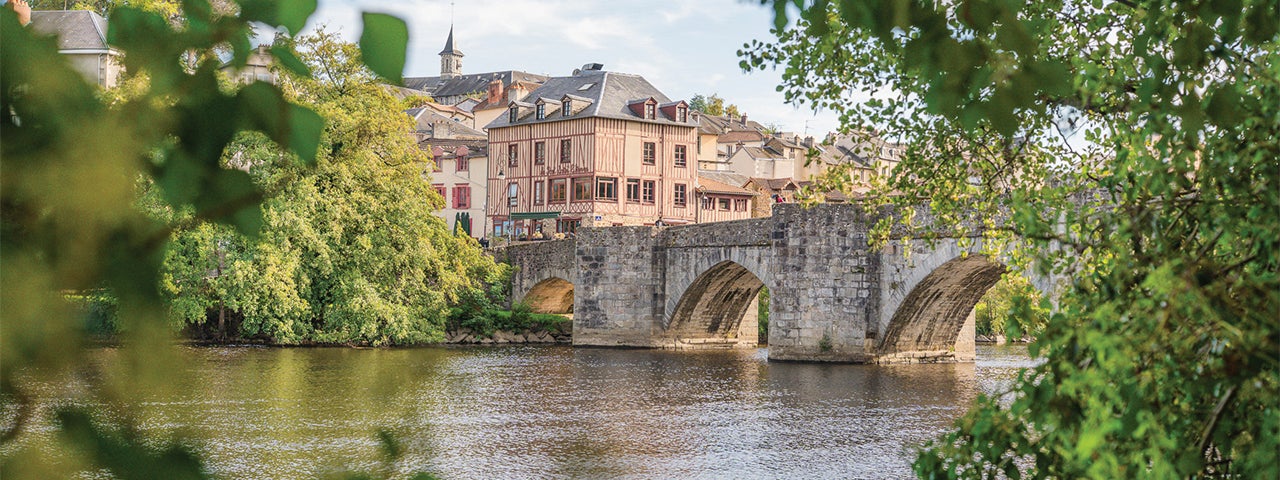
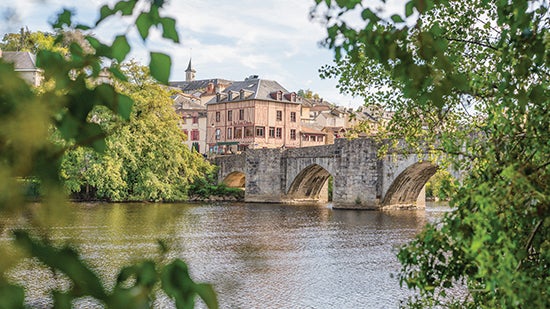
Limoges, a city in southwest-central France, has been at the epicentre of fine porcelain work for more than 200 years and is synonymous with artistic mastery. When kaolin, a soft white clay, was discovered nearby in 1768, it sparked the beginning of an industry that would come to define this city.
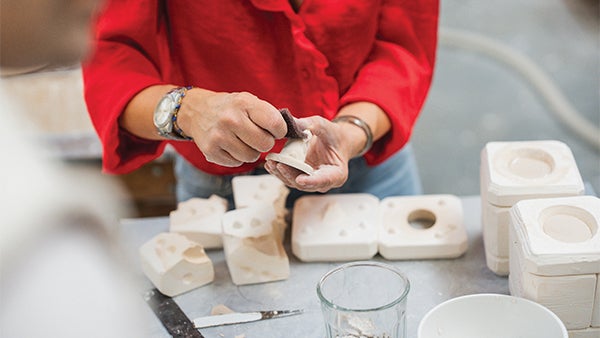
“We carry with us two centuries of history, of know-how,” explains Grégory Rosenblat, managing director of Ateliers Arquié, a porcelain maker that has preserved traditional craft methods. “We are 15 people in-house here, between four workshops. We are making the plaster moulds, we are casting porcelain, we are glazing, firing and painting, if it’s required. We have two people making the moulds, with three to four people making casts, polishing porcelain and then glazing. And we also have a workshop for decoration and painting.
“Today, it’s important in France – and everywhere else – to look in the past and to see the roots of products, the raw materials.”
ARTISAN ORIGINS
“You have to picture the 19th century as a constant evolution on how to master fire and how to master science,” explains Thomas Hirat, Museum Director at the Four des Casseaux in Limoges, which houses the last surviving 18th-century kiln used by porcelain makers in the city. “It pretty much skyrocketed during the whole 19th century and the peak of the industry in Limoges was in the late 19th to the early 20th century. In 1900, for example, we had 55 factories in town – there’s no comparison anywhere else in France to that.”
From humble beginnings with a two or three-cubic-metre kiln in the late 18th century at the Four des Casseaux museum site, production processes were constantly evolving and improving. Visitors today can behold the much larger 80-cubic-metre kiln that represented technological progress when it was built in 1900.
But Limoges hasn’t let itself become an outdated open-air museum. Fine porcelain production remains at the core of modern-day culture, with workshops and factory tours providing an intimate glimpse into the extremely detailed processes that guarantee every piece leaves the atelier floor meeting the most exacting standards.
DESIGNER COLLABORATION
The painstaking and delicate process of crafting Limoges porcelain reflects the visually stunning output of artisan creators. Continuing to innovate hundreds of years after the first kaolin clay was mined and the first pieces of porcelain were crafted is no small feat.
But, for Rosenblat and his team at Ateliers Arquié, collaborating with artists and designers is central to creating truly inventive porcelain artworks. Joining together technical knowledge from Ateliers Arquié and master artistry has produced truly one-of-a-kind marvels that push the boundaries of what is possible to fabricate with this fine material.
“We need this dialogue to create interest in the new productions. It was maybe not necessary in the past when the plate was simply round and flat with flowers and that’s it. But, today, everything has already been done,” Rosenblat says.
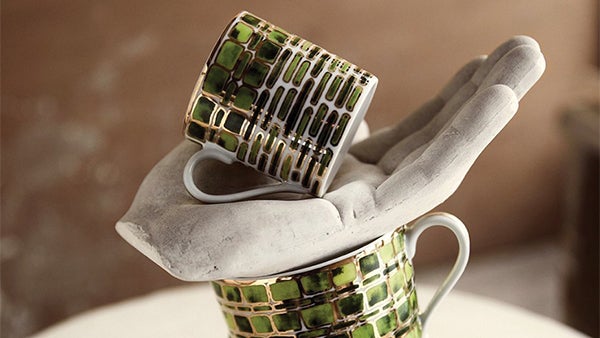
In partnership with designers Nicolas Lelièvre and Florian Brillet, Rosenblat set out on the Aotsugi project in 2021 to create 20 porcelain pieces that would replace missing or damaged parts of the cityscape. Inspired by the Japanese art form of kintsugi, which sees broken objects being repaired with gold to highlight imperfections, everything from missing tiles to gutters was repaired and replaced by the trademark ‘oven blue’ Limoges porcelain.
“Limoges is a city of porcelain and there are just a few pieces of porcelain outside in the street. We tried to use porcelain in the city and see how close we can work together with architects,” Rosenblat explains. “It’s a way to show that we can integrate porcelain as a construction material. We have bench seats in porcelain we can sit on and there are some large flower pots, together with some porcelain decoration.”
Finding ways to adapt a material like porcelain to everyday, real-world applications is a genuine challenge. For example, constructing a bench seat took close to two years from inception to output. Every step, from getting the exact right mix of materials to finding the best way to fit iron inside the porcelain frame and fabricating large, thick pieces with better resistance, required new ways of working at Ateliers Arquié.
ENDURING POPULARITY
Entering modernity has presented intense challenges to the city’s porcelain manufacturers. The 20th century, with its interconnected global marketplaces, gave many new buyers access to the oncerestricted Limoges porcelain. At the same time, cheap and relatively low-quality porcelain objects have flooded the trade.
“Malaysia, China and Bangladesh can produce a plate for under one Euro. We can’t compete with that,” explains Hirat. “You can’t produce something like this in France, or England, or wherever in Europe.”
By contrast, looking back at the history of porcelain manufacturing in the area, Hirat points to a time when everything was small-scale and handmade. “We crushed our own kaolin. We were firing with wood that we were cutting directly from our forests. We prepared everything with our hands in the factories and we had to shape it. It took a long time with potters’ wheels,” he says.
Picking up a nearby cup, Hirat shines his phone’s light underneath to transform the vessel into a makeshift lamp. “Look how translucent it is. You could go to every factory outlet store right now, but you wouldn’t find this quality of production. The feet are so thin and the handle is so strong.”
As the custodian of this treasured cultural heritage, Hirat hopes to see even more experimentation in the creation of porcelain objects and the wide-scale return to traditional production methods he views as resulting in items more in line with those created in the past.
“I’m passionate about Limoges, porcelain and its history, but I’m not a good example. Of course, this speaks to me. But as a random customer in a store today, would they care like this?”
So, is Hirat hopeful that as younger craftspeople join the profession, more experimentation and energy will be fed into this centuries-old skill? “I am hopeful, otherwise I wouldn’t be where I am today, directing the museum. I don’t want to sound too pessimistic, because I am not. I’m very happy and proud that we still have 12 makers left around Limoges, and I try to pass on my knowledge to the younger generations,” he says. “I stay optimistic because we still have something happening here in Limoges.”
Banner Image Credit: CDD Limoges